Macana Keynote Template: A Strategic Framework for Professional Presentations
Selecting the right presentation asset is rarely just about aesthetics; it is a decision about operational efficiency and communication clarity. The Macana Keynote Template serves as more than a collection of attractive slides. It functions as a structured design system intended to reduce friction between your strategic message and its visual execution. For entrepreneurs, marketers, educators, and business leaders, the primary value lies in its capacity to standardize high-quality output without requiring extensive graphic design resources. With 150 total slides organized across five distinct premade color variations, this template offers a scalable foundation for diverse communication needs, from internal stakeholder updates to external client pitches.
The strategic utility of Macana stems from its modular architecture. Rather than forcing users into a linear narrative, it provides categorized building blocks that support various rhetorical goals. Understanding how to leverage these components intentionally can significantly impact planning cycles, brand consistency, and audience engagement. This article explores how to integrate this tool into professional workflows effectively, ensuring that design choices serve business objectives rather than distracting from them.
Aligning Visual Assets with Communication Goals
Before opening the file, it is essential to define the specific outcome of your presentation. A common pitfall when using comprehensive templates like Macana is browsing through options randomly and selecting slides based solely on visual appeal. This approach often leads to disjointed narratives where the form does not support the function. Instead, map your content requirements to the template’s structural categories first.
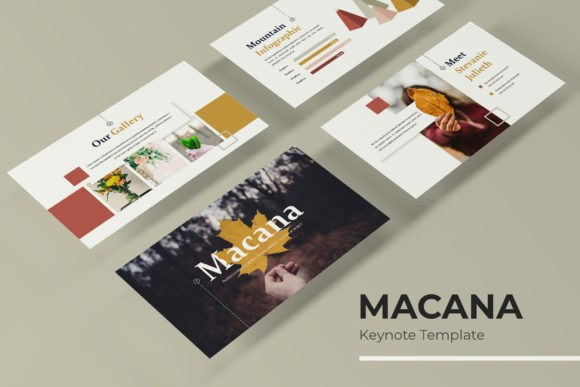
The inclusion of dedicated Section Break Slides is a critical feature for cognitive pacing. In lengthy presentations or complex reports, these slides act as mental reset buttons for the audience. Strategically, they should be used to signal transitions between distinct topics, such as moving from market analysis to financial projections. By utilizing these pre-designed breaks, you maintain visual continuity while clearly delineating logical chapters in your argument. This reduces cognitive load and helps stakeholders retain key information.
Similarly, the Gallery and Portfolio slide layouts are designed for evidence-based storytelling. Whether showcasing product photography, case study results, or team credentials, these layouts provide balanced negative space and alignment grids. When planning your deck, identify which sections require visual proof versus data visualization. Use the portfolio layouts specifically where trust-building is the primary objective, ensuring that images are high-resolution and contextually relevant to avoid the generic stock-photo aesthetic that undermines credibility.
Leveraging Data Visualization for Decision Making
Data presentation is often where professional presentations fail. Complex datasets can overwhelm audiences if not translated into digestible insights. Macana includes handcrafted infographic slides that address this challenge directly. These are not merely decorative elements; they are functional tools for synthesizing information. The resizable and editable graphics allow you to adjust proportions to reflect accurate data relationships, maintaining integrity while enhancing readability.
When utilizing these infographics, prioritize clarity over density. Select chart types that match your analytical goal: use comparative layouts for benchmarking against competitors, process flows for operational explanations, or timeline graphics for project roadmaps. Because these elements are vector-based and fully editable within Keynote, you can customize colors and labels to match your specific dataset without breaking the design system. This capability transforms raw numbers into strategic narratives, facilitating faster decision-making during meetings.
However, exercise caution when adapting these graphics. There is a risk of distorting data to fit a predefined visual container. Always verify that the modified graphic accurately represents the underlying metrics. If a specific handcrafted infographic does not align with your data structure, it is strategically better to use a simpler layout than to force-fit complex information into an inappropriate visual metaphor. Accuracy must always supersede aesthetic convenience.
Operational Efficiency Through Master Slides and Color Systems
For teams and frequent presenters, consistency is a productivity multiplier. Macana’s reliance on Master Slides ensures that global changes propagate instantly across multiple slides. This feature is vital for maintaining brand standards, especially when collaborating across departments or updating decks for recurring meetings. Instead of formatting individual text boxes or shapes, adjustments made at the master level preserve pixel-perfect alignment and typography hierarchy throughout the entire presentation.
The five premade color variations offer another layer of operational flexibility. These are not just different hues; they represent distinct tonal palettes suitable for different contexts. A darker variation might convey premium positioning for investor relations, while a lighter option could be more appropriate for educational workshops or internal training. Having these variations ready eliminates the time-consuming process of manual rebranding for every new project. When selecting a palette, consider the viewing environment and the emotional response required from the audience, rather than personal preference alone.
This system also supports long-term asset management. By treating the template as a living design library, organizations can build a repository of approved slide configurations. New team members can onboard faster by using established layouts, reducing the learning curve for corporate communications. The drag-and-drop picture placeholders further accelerate production, allowing non-designers to populate slides quickly while adhering to professional spacing and cropping standards.
Technical Considerations and Implementation Best Practices
To maximize the return on investment from Macana, users must understand the technical parameters included in the package. The delivery of five KEY files in widescreen format ensures compatibility with modern display standards and projection equipment. Widescreen (16:9) is currently the industry standard for both digital and physical presentations, providing adequate horizontal space for side-by-side comparisons and multimedia integration. Always confirm your venue or platform specifications before finalizing your aspect ratio to prevent formatting issues during delivery.
Typography plays a foundational role in the template’s effectiveness. The Readme file includes download links for the free fonts used in the design. Installing these typefaces prior to editing is mandatory to preserve the intended visual hierarchy and spacing. Substituting system fonts without adjusting kerning or line height can degrade the pixel-perfect illustrations and disrupt layout balance. Treat font installation as a prerequisite step in your workflow, not an afterthought.
It is equally important to manage expectations regarding imagery. As noted in the documentation, all photographs used in previews are for illustration purposes only and are not included. This distinction is crucial for budgeting and planning. You must source your own high-quality imagery or license stock photography separately. Relying on low-resolution or watermarked placeholder images in a final presentation damages professional credibility. Plan your image acquisition phase concurrently with your content drafting to ensure visuals reinforce, rather than detract from, your strategic message.
Mitigating Risks and Maintaining Authenticity
While Macana provides a robust framework, over-reliance on any template carries inherent risks. The most significant danger is producing presentations that feel formulaic or disconnected from the unique nuances of your specific situation. Audiences are increasingly sensitive to generic design patterns. To mitigate this, treat the template as a starting point, not a finished product. Customize copy, adjust visual emphasis, and combine slides in unexpected ways to create a bespoke experience that reflects your organization’s voice.
Another risk involves scope creep. With 150 slides available, there is a temptation to include more content simply because a layout exists for it. Resist this urge. Strategic communication requires subtraction as much as addition. Audit each selected slide against your core objectives: Does this advance the argument? Is this information necessary for the audience to make the desired decision? If the answer is no, remove it regardless of how visually appealing the layout may be. Discipline in curation distinguishes professional presentations from mere data dumps.
Finally, consider the longevity of your presentation assets. Trends in design evolve, and what looks current today may appear dated in two years. Macana’s clean, minimalist aesthetic is designed to age gracefully, but regular reviews of your customized masters are advisable. Update color codes, refresh iconography, and retire underperforming layouts to keep your presentation toolkit aligned with contemporary standards and evolving brand guidelines.
Strategic Integration Summary
Macana Keynote Template represents a significant resource for professionals seeking to elevate their communication standards while optimizing production workflows. Its value extends beyond surface-level design, offering structural solutions for pacing, data visualization, and brand consistency. Success depends on intentional application: aligning features with specific goals, respecting technical requirements, and maintaining editorial discipline. By approaching this tool as a strategic partner rather than a shortcut, entrepreneurs, educators, and business leaders can transform routine presentations into compelling instruments for influence and results. The ultimate measure of effectiveness is not the beauty of the slides, but the clarity of the decisions they facilitate.