Strategic Application of the Google Slides Template - Chronic for Professional Communication
Selecting the right presentation framework is a strategic decision that influences how stakeholders perceive your message, brand, and competence. The Google Slides Template - Chronic offers a structured visual environment designed to bridge the gap between complex medical or technical data and clear, persuasive storytelling. While originally positioned for chronic medical presentations, its architectural flexibility makes it a viable asset for creative agencies, corporate profiles, startups, and personal portfolios. Understanding the strategic utility of this template requires looking beyond its aesthetic appeal to evaluate how its specific features support long-term communication goals, operational efficiency, and brand consistency.
Aligning Visual Structure with Strategic Objectives
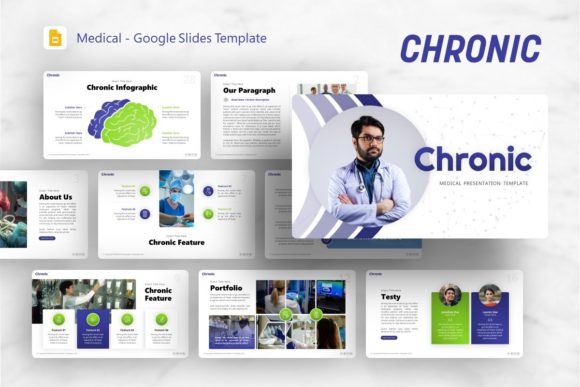
The primary value of the Google Slides Template - Chronic lies in its ability to impose order on complex information. For professionals aged 20 to 50 managing diverse projects, the challenge is often not a lack of content but an excess of unstructured data. This template provides a pre-validated narrative flow through its 36 distinct slides. Rather than viewing these slides as mere placeholders, decision-makers should approach them as a modular toolkit for organizing thought. When preparing a pitch deck or a company profile, the handcrafted infographics serve as cognitive anchors, helping audiences process dense information without fatigue.
For entrepreneurs and marketers, the template’s design supports specific positioning strategies. The clean, pixel-perfect illustrations convey professionalism and attention to detail, which are critical when establishing trust in healthcare, consulting, or creative services. By utilizing a master slide-based system, users ensure that every adjustment maintains global consistency. This reduces the risk of branding errors during high-pressure preparation phases and allows teams to focus on refining their argument rather than fixing alignment issues. The strategic advantage here is speed combined with quality; you achieve a bespoke look without the bespoke timeline or cost.
Leveraging Features for Operational Efficiency
Efficiency in presentation design is not just about saving time; it is about preserving mental energy for high-value tasks like strategy formulation and audience analysis. The Google Slides Template - Chronic is engineered to support this through several key technical features:
- Master Slide Architecture: Changes made at the master level propagate instantly across all relevant slides. This is essential for organizations that need to update branding, logos, or color schemes across multiple departments or client decks without manual reformatting.
- Editable Vector Graphics: Unlike raster images that degrade when resized, the included vector icons and graphics remain crisp at any dimension. This ensures your portfolio or pitch deck looks professional whether viewed on a mobile device or projected in a conference hall.
- Drag-and-Drop Picture Placeholders: This feature standardizes image integration, preventing layout breaks. For photographers and creative agencies, this means showcasing work within a consistent frame that enhances rather than distracts from the visual content.
- Comprehensive Documentation: The included documentation file acts as an operational manual, reducing the learning curve for new team members and ensuring the template is used as intended.
These features collectively transform the presentation creation process from a design task into a content assembly task. For freelancers and small business owners operating with limited resources, this distinction is vital. It allows for the rapid deployment of high-quality collateral that competes visually with larger organizations.
Contextual Use Cases Beyond Medical Presentations
While the nomenclature suggests a niche medical application, the underlying structure of the Google Slides Template - Chronic is universally applicable to any field requiring clarity and authority. Recognizing these cross-functional applications maximizes the return on investment for this digital asset.
Creative Agencies and Portfolios: The template’s minimalist aesthetic provides a neutral canvas that lets creative work take center stage. For agencies pitching to clients, the structured layout helps articulate the "problem-solution-result" framework effectively. The infographic elements can be repurposed to visualize campaign metrics, user journeys, or creative processes, turning abstract concepts into tangible deliverables.
Startups and Pitch Decks: Investors review hundreds of decks annually. A cluttered or inconsistent presentation signals operational immaturity. The Google Slides Template - Chronic offers a disciplined layout that guides founders through essential narrative beats. The 36-slide count encourages comprehensive coverage of market analysis, product roadmaps, and financial projections without overwhelming the viewer. Using a polished template demonstrates respect for the investor's time and attention.
Corporate Training and Internal Communications: For educators and HR professionals, the template serves as a standardized vessel for institutional knowledge. The handcrafted infographics are particularly useful for explaining compliance procedures, organizational changes, or wellness programs. Consistency in internal presentations reinforces corporate culture and aids retention by providing a familiar visual language for employees.
Strategic Planning and Risk Mitigation
Adopting a template is not a substitute for strategic thinking. In fact, relying on the Google Slides Template - Chronic without clear objectives can lead to generic outputs that fail to resonate. Before opening the PowerPoint .PPTX file, practitioners should define the desired outcome of the presentation. Are you seeking approval, funding, education, or engagement? The answer dictates which of the 36 slides to utilize and how to adapt the handcrafted infographics.
One significant risk is the "template trap," where users force unique content into pre-existing shapes regardless of fit. To avoid this, treat the template as a starting point, not a constraint. If a specific infographic does not accurately represent your data, modify it or replace it. The fully editable nature of the graphics exists precisely for this purpose. Authenticity always trumps aesthetic perfection; a slightly modified slide that tells the truth is superior to a perfect slide that misleads.
Another consideration is licensing and asset management. Users must remember that demo images are for preview purposes only and are not included in the download. Failing to plan for original imagery can stall production. Strategically, this means sourcing high-quality, licensed photography or creating custom vectors before beginning the layout phase. This preparation ensures the final output is legally compliant and visually cohesive.
Enhancing Long-Term Brand Value and Decision Making
Consistent use of structured templates like Chronic contributes to long-term brand equity. When stakeholders repeatedly encounter well-organized, visually consistent communications, they develop a subconscious association with reliability and professionalism. This is particularly important for consultants and service providers whose product is essentially their expertise. The template acts as a packaging mechanism for intangible value.
Furthermore, the discipline required to use this template effectively improves decision-making skills. Curating content to fit a refined layout forces presenters to prioritize information. You cannot include everything; you must select what matters most. This editing process clarifies your own understanding of the subject matter. If you struggle to fit your message into the template’s logical flow, it may indicate that your strategy itself needs refinement. In this sense, the Google Slides Template - Chronic functions as a diagnostic tool for your messaging strategy.
Practical Guidance for Intentional Implementation
To derive maximum value, approach the implementation of this template with intentionality. Begin by auditing the 36 slides against your current project needs. Identify the core narrative arc and map your content to specific slide types. Utilize the master slides to embed your brand guidelines immediately, locking in fonts, colors, and logos to prevent drift.
When customizing the handcrafted infographics, focus on data accuracy over decorative complexity. Resize and edit graphics to reflect actual metrics rather than placeholder values. For personal portfolios, curate images rigorously; use the drag-and-drop placeholders to maintain alignment, but ensure each selected image serves a specific purpose in demonstrating your capabilities.
Finally, consider the lifecycle of the presentation. Because the Google Slides Template - Chronic is based on master slides and editable vectors, it is inherently reusable. Create a sanitized "master version" stripped of specific project data to serve as a baseline for future work. This builds a sustainable asset library that accelerates future workflows while maintaining high standards. By treating this template as a strategic component of your communication infrastructure rather than a disposable design fix, you secure lasting benefits in productivity, clarity, and professional impact.