Cibo Keynote Template: A Strategic Asset for Professional Presentation Design
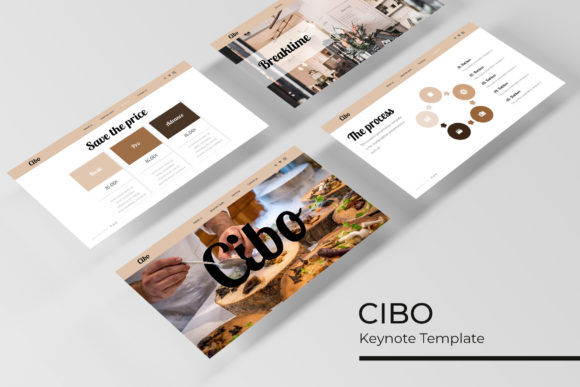
In the landscape of modern business communication, the quality of your visual assets directly influences how your message is received and retained. The Cibo Keynote Template serves as more than a mere collection of slides; it functions as a comprehensive design system engineered to streamline the creation of high-impact presentations. For entrepreneurs, marketers, educators, and decision-makers, adopting this template is a strategic move toward operational efficiency and brand consistency. With 150 total slides distributed across five distinct premade color variations, Cibo provides a robust framework that balances aesthetic flexibility with structural integrity. Understanding how to leverage these assets intentionally can transform presentation development from a recurring bottleneck into a scalable competitive advantage.
Strategic Alignment Through Modular Design Systems
The primary value proposition of the Cibo Keynote Template lies in its modular architecture. Rather than offering a single rigid narrative flow, the template provides 30 unique slides for each of its five color themes. This segmentation allows professionals to approach presentation design with a component-based mindset. When planning a pitch deck, an annual report, or an educational workshop, you are not starting from a blank canvas but selecting from a curated library of pre-validated layouts. This reduces cognitive load during the creative process, allowing you to focus on narrative strategy and data accuracy rather than alignment and typography.
For small business owners and freelancers operating with limited resources, this modularity supports rapid iteration. You can test different visual approaches for various stakeholders without redesigning the entire deck. The five color variations act as instant thematic pivots, enabling you to tailor the emotional tone of a presentation to specific audiences while maintaining a cohesive underlying structure. This capability is particularly valuable for agencies or consultants who manage multiple client brands simultaneously, as it allows for quick adaptation without sacrificing professional polish.
Leveraging Handcrafted Infographics for Data Communication
Data visualization is often where presentations fail to convert interest into understanding. Generic chart tools frequently produce sterile graphics that lack context. Cibo addresses this through handcrafted infographic slides integrated directly into the Keynote environment. These are not static images but fully editable vector elements built on master slides. This distinction is critical for long-term utility. As your metrics evolve, you can update the data points within Keynote itself without needing external graphic design software or returning to the original source file.
Strategically, these infographics should be used to anchor key arguments. When presenting complex operational data or market research, select an infographic layout that mirrors the logical relationship of your information—whether comparative, sequential, or hierarchical. Because these graphics are pixel-perfect illustrations designed specifically for the template’s grid system, they maintain visual harmony even when resized or recolored. This ensures that your data storytelling remains as polished as your textual content, reinforcing credibility with analytical audiences.
Operational Efficiency and Master Slide Architecture
Sustainable presentation workflows depend on proper use of master slides. Cibo is engineered with this technical foundation in mind. The resizable and editable graphic picture placeholders utilize drag-and-drop functionality rooted in the master slide layer. This means that global changes to branding, logo placement, or footer information can be applied across dozens of slides instantly. For organizations attempting to standardize internal communications or onboard new team members, this feature enforces brand guidelines automatically, reducing the risk of off-brand materials entering circulation.
The inclusion of dedicated section break slides further enhances navigational clarity. In lengthy decks comprising 30 or more slides, audience attention naturally degrades without clear signposting. These transition slides serve as visual palate cleansers that reorient the viewer’s focus. From a planning perspective, they force the presenter to structure content into digestible chapters. Before populating the template, map your narrative arc against these section breaks. If your content does not fit neatly into the provided transitions, it may indicate a need to refine your story structure rather than force-fit the content. The template thus acts as a diagnostic tool for narrative coherence.
Portfolio and Gallery Applications for Creative Professionals
For creators, publishers, and agencies, the portfolio and gallery slides offer specialized layouts optimized for visual work. Unlike standard image grids, these layouts account for varying aspect ratios and negative space, ensuring that featured work remains the focal point. When using Cibo for client pitches or capability statements, treat these slides as curated exhibitions rather than exhaustive archives. Select only the work that directly supports your current positioning goal.
The editability of these placeholders allows for dynamic customization. You might create a master portfolio deck containing all past projects, then duplicate and prune it for specific prospects. Because the graphics are vector-based and the images are masked within Keynote, swapping content takes seconds. This agility enables real-time personalization during sales conversations or networking events, significantly improving engagement rates compared to static PDF portfolios.
Implementation Considerations and Risk Mitigation
While Cibo offers substantial advantages, relying on any template without strategic intent carries risks. The most common pitfall is prioritizing aesthetics over relevance. Having access to 150 slides does not mean you should use them all. Overstuffing a presentation with varied layouts simply because they are available creates visual noise and dilutes your core message. Adopt a subtractive approach: start with the full library and ruthlessly eliminate slides that do not serve a specific communicative function in your current context.
Another consideration is font dependency. The template includes links to free font downloads, but these external resources must be managed proactively. Before sharing editable files with collaborators or clients, verify that all required typefaces are installed on their systems. Missing fonts can revert text to system defaults, breaking layouts and undermining professionalism. Include a brief technical note in your handoff documentation regarding font installation to prevent formatting errors downstream.
Understanding Deliverables and Licensing Boundaries
Effective asset management requires clear understanding of what is included. The Cibo package contains five KEY files in widescreen format, corresponding to the five premade color schemes. A readme file provides essential setup instructions, and the free font download link ensures typographic consistency. Crucially, preview images are for illustration purposes only and are not part of the deliverable assets. This distinction matters for budgeting and expectation setting; you must supply your own photography and imagery.
Plan your media acquisition strategy before beginning design work. Since the template uses picture placeholders, source high-resolution images that match the template’s aspect ratios to avoid cropping issues. Stock photography should be selected based on conceptual alignment with your message, not merely decorative appeal. The template provides the vessel, but your content provides the value. Treating the two as separate but integrated workstreams prevents last-minute scrambling for visuals.
Long-Term Value and Scalability
Investing time in mastering the Cibo Keynote Template yields compounding returns. As you become familiar with its master slide structure and infographic library, your production velocity increases exponentially. More importantly, you develop a reusable visual language that strengthens brand recognition over time. Stakeholders begin to associate the clean, structured aesthetic with your organization’s professionalism and attention to detail.
Consider creating derivative templates for specific use cases. You might establish a "Sales Deck" variant stripped down to 20 essential slides, or a "Training Module" variant emphasizing instructional infographics. By building upon Cibo’s foundation rather than starting fresh each time, you preserve design consistency while optimizing for specific functional requirements. This approach transforms a one-time purchase into a living design system that evolves alongside your business objectives.
Ultimately, the strategic utility of Cibo depends on disciplined application. It excels when used as a framework for thoughtful communication rather than a shortcut for generic content. Align your slide selection with clear goals, respect the technical architecture of master slides, and invest in quality custom content to fill the placeholders. When approached with this level of intentionality, Cibo becomes more than a presentation template—it becomes a catalyst for clearer thinking and more effective professional expression.