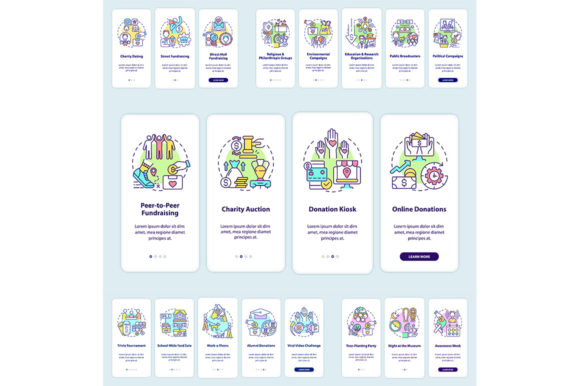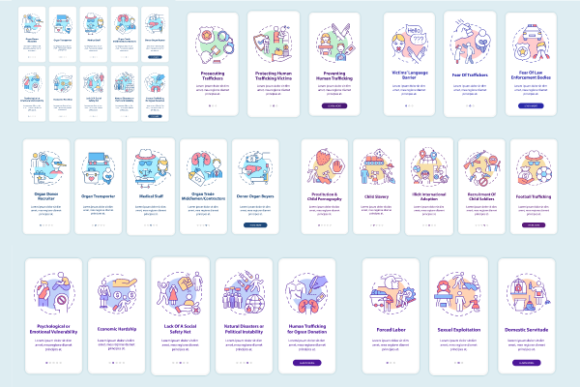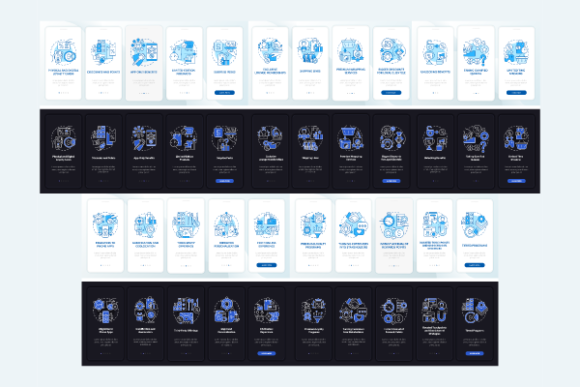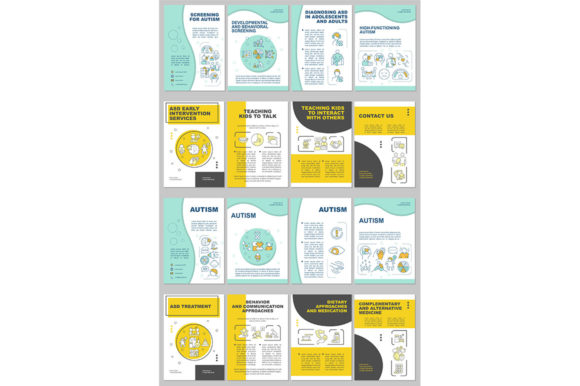
Adulthood Onboarding App Page Bundle: Streamlining Design for Life Management Tools
Designing digital products that guide users through complex life transitions requires more than just aesthetic appeal; it demands a structured visual language that communicates clarity and empathy. The Adulthood Onboarding App Page Bundle serves as a foundational asset for creators building applications focused on personal development, financial literacy, career planning, and general maturity milestones. This collection of mobile app page screens provides a pre-architected framework for addressing the specific challenges young adults and professionals face when navigating independence. Rather than starting from a blank canvas, designers and product managers can leverage this bundle to accelerate the prototyping phase and ensure the user interface supports the psychological weight of the content.
In the broader context of product development, this bundle fits into the critical intersection of user experience strategy and visual execution. It is not merely a set of pretty pictures but a functional toolkit for mapping out user journeys related to "adulting" tasks. Whether you are an entrepreneur validating a new fintech concept, an educator creating a student success platform, or a freelancer designing a client’s lifestyle coaching app, these templates bridge the gap between abstract curriculum and tangible interface elements. The inclusion of linear color illustrations and vector-based GUI components ensures that the final product maintains a modern, approachable aesthetic that reduces cognitive load during high-stress learning moments.
Integrating the Bundle Across Project Phases
The utility of the Adulthood Onboarding App Page Bundle extends across the entire lifecycle of a digital project. Understanding where to deploy these assets maximizes return on investment and maintains design consistency.
Pre-Project Validation and Pitching
Before writing a single line of code, stakeholders need to visualize the solution. During the discovery and pitching phases, this bundle acts as a high-fidelity communication tool. Instead of describing how a "budgeting maturity module" will look, you can present polished screen compositions that demonstrate the flow immediately. This is particularly valuable for securing buy-in from investors or clients who may struggle to imagine abstract UX concepts. The professional quality of the JPEG and PNG exports allows for immediate inclusion in pitch decks and brochures without additional rendering time.
Active Development and UX Architecture
During the core build phase, the editable AI, EPS, and SVG files become the primary working documents. Developers and UI designers can extract specific components—such as progress trackers, checklist interfaces, or educational card layouts—and adapt them to the specific technical requirements of the project. Because the bundle focuses on adulthood onboarding, the information architecture already accounts for common patterns in this niche, such as step-by-step wizards and achievement unlocking mechanisms. This reduces the time spent reinventing standard interaction models and allows the team to focus on custom features that differentiate the product.
Post-Launch Marketing and Education
After deployment, the same visual assets used in development transition seamlessly into marketing and user support materials. Consistency between the app interface and external communications builds trust. Use the vector templates to create infographic elements for blog posts, social media carousels explaining app features, or email newsletter headers. For educators and bloggers, these graphics serve as excellent visual aids when writing about maturity issues or productivity workflows, ensuring that the content remains visually engaging and aligned with the app’s branding.
Visualizing Maturity: The 8-Step Walkthrough Framework
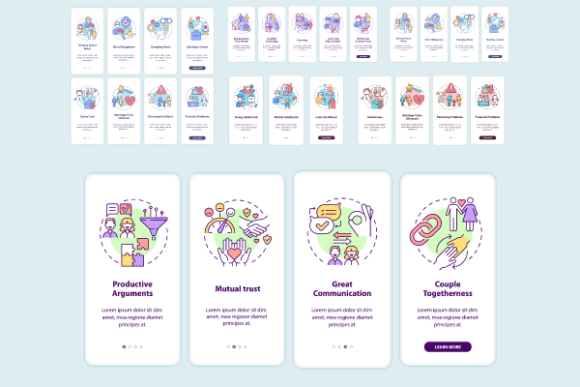
A standout feature of this collection is the structured approach to teaching complex concepts. Adulthood is rarely a single event; it is a series of learned behaviors and decisions. The bundle includes graphic instructions designed specifically for an eight-step walkthrough format. This structure is essential for breaking down overwhelming topics like credit scores, lease agreements, or emotional regulation into digestible micro-interactions.
When implementing this framework, consider the following practical applications:
- Sequential Learning Paths: Use the step indicators to create a sense of progression. Adult learners often feel lost when facing new responsibilities; a clear visual path reduces anxiety and increases completion rates.
- Concept Association: The linear color illustrations are designed to pair abstract ideas with concrete visuals. For example, a step regarding "emergency funds" might utilize a shield or safety net iconography rather than generic currency symbols to emphasize security over accumulation.
- Cognitive Pacing: The template spacing encourages designers to limit text density. Effective onboarding requires breathing room. The pre-set layouts enforce best practices in whitespace management, preventing the interface from becoming cluttered.
- Feedback Loops: Steps seven and eight in the walkthrough templates often serve as review or confirmation points. Utilize these screens to reinforce key takeaways before allowing the user to exit the module.
This systematic visualization helps transform vague advice into actionable steps. For creators, it eliminates the guesswork involved in structuring educational content within a mobile environment.
Technical Compatibility and File Format Strategy
Efficiency in design workflows depends heavily on file compatibility and organization. The Adulthood Onboarding App Page Bundle supports a versatile ecosystem through its multi-format delivery. Understanding which format to use for specific tasks prevents bottlenecks.
SVG and EPS for Scalability: These vector formats are non-negotiable for responsive design. When designing for multiple device sizes, vectors ensure that linear illustrations remain crisp on everything from compact smartphones to large tablets. They also allow for easy recoloring to match specific brand guidelines without degrading image quality. Use these for icons, UI components, and illustration sets that require frequent iteration.
AI for Deep Customization: Adobe Illustrator source files provide full access to layers, typography, and grouping. This is where structural changes happen. If your project requires altering the grid system or modifying the base component library, the AI files serve as the master source. Maintaining a clean layer structure in these files ensures long-term usability as the project evolves.
JPEG and PNG for Rapid Sharing: While vectors are for production, rasterized formats facilitate collaboration. Use high-resolution PNGs for Figma imports or stakeholder reviews where editing is not required. JPEGs are optimized for web use in marketing materials or documentation. Having these pre-rendered saves significant export time during sprint reviews or client updates.
Workflow Integration and Quality Control
To integrate this bundle smoothly into existing routines, treat it as a design system extension rather than a standalone clip-art pack. Establish naming conventions that align with your current project structure before importing assets. This prevents file chaos and ensures that new team members can navigate the resources intuitively.
Quality control is paramount when using pre-made assets. Always audit the templates against accessibility standards. Ensure that the linear color illustrations maintain sufficient contrast ratios against background colors. Verify that text placeholders in the templates are replaced with inclusive, clear language appropriate for your specific audience. The bundle provides the container, but the integrity of the content relies on your editorial oversight.
Furthermore, consider the interoperability with other tools. These screens are designed to complement standard UI kits and icon libraries. When combining this bundle with other BSD Studio products or third-party resources, maintain a unified style guide. Adjust stroke weights, corner radii, and color palettes globally to create a cohesive experience. The goal is for users to perceive a singular, polished product rather than a collage of disparate assets.
Strategic Value for Diverse Creators
The versatility of the Adulthood Onboarding App Page Bundle makes it relevant across various professional domains. For marketers and publishers, it offers a shortcut to creating visually rich content that resonates with demographics seeking self-improvement. For educators and coaches, it provides a professional-grade visual aid that elevates course materials above standard slide decks. For app developers and entrepreneurs, it significantly reduces the time-to-market for MVPs by solving the "blank page" problem for core onboarding flows.
Ultimately, this resource is about respecting the user's time and emotional state. Adulthood onboarding is a sensitive topic. Users engaging with these apps are often in transitional, sometimes stressful, periods of their lives. By utilizing professionally crafted, empathetic, and structured design templates, creators signal competence and care. The bundle handles the heavy lifting of visual hierarchy and layout logic, freeing you to focus on the substance of the guidance you provide.
Count on us in search for icons, brochure templates, infographic elements, mobile app screen pages, and so much more. Find what you need in our shop to make sure you are saving time on design work while keeping up top quality. BSD studio provides a variety of products, topics, and file types so that there is always something new to support your creative and business objectives. Whether you are refining an existing platform or launching a new initiative, integrating these structured visual assets ensures your project starts with a foundation of clarity, professionalism, and user-centric design.