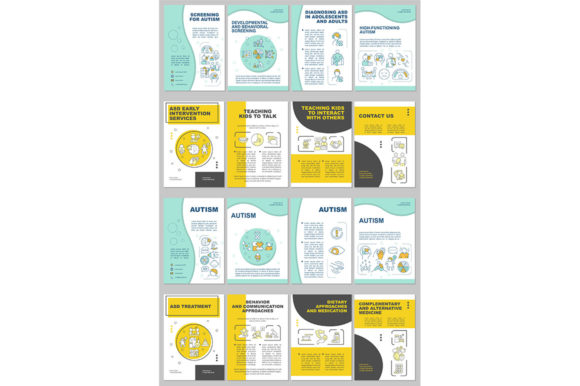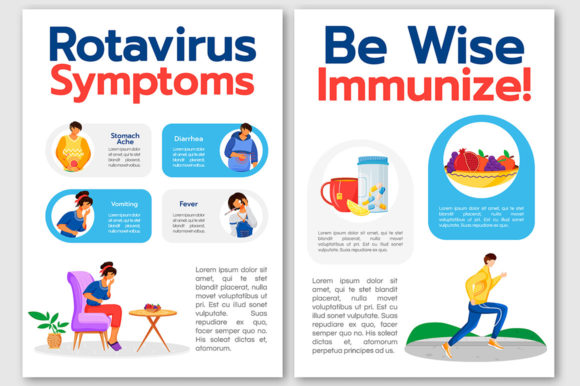
Integrating the Rotavirus Symptoms Flat Vector Brochure into Health Communication Workflows
Effective public health communication relies on the rapid translation of complex medical data into accessible visual formats. For designers, educators, and healthcare marketers, the Rotavirus Symptoms Flat Vector Brochure serves as more than a static image; it is a foundational asset within a broader content production ecosystem. This resource bridges the gap between clinical accuracy and public understanding, providing a pre-structured visual framework that accelerates the creation of educational materials. Understanding where this template fits into your design workflow ensures that health messaging remains consistent, accurate, and visually engaging across multiple platforms.
The flat vector aesthetic is specifically chosen for medical contexts because it reduces cognitive load. Unlike photorealistic imagery which can sometimes evoke anxiety or appear unhygienic in clinical settings, flat design offers a clean, neutral, and approachable tone. When utilizing a Rotavirus symptoms flat vector brochure template, professionals are not merely downloading a graphic; they are adopting a standardized visual language that facilitates faster approval cycles with medical stakeholders and better retention rates among target audiences.
Strategic Application Across Project Phases
The utility of this vector asset extends throughout the entire lifecycle of a health communication project. Integrating it effectively requires recognizing its role before, during, and after the primary creative execution.
Pre-Production and Stakeholder Alignment
Before pixel-perfect design begins, the brochure template functions as a prototyping tool. During the planning phase of a vaccination campaign or pediatric health initiative, use the layout to map out information hierarchy. The predefined text spaces allow content strategists to draft copy that fits specific spatial constraints, preventing the common issue of text overflow in later stages. Presenting the Rotavirus Symptoms Flat Vector Brochure structure to medical directors or clients early in the process establishes a visual baseline. This alignment minimizes revision rounds by confirming that the tone and information density meet regulatory and educational standards before significant labor is invested in custom illustration.
Active Production and Asset Adaptation
During the execution phase, the included file formats (EPS, AI, SVG) provide the flexibility needed for multi-channel campaigns. A single master file can be adapted simultaneously for print and digital outputs. Designers can isolate specific symptom icons from the brochure to create social media cards, while retaining the full tri-fold layout for clinic handouts. The vector nature of the asset ensures that whether the output is a large-format infographic poster with text space or a small mobile screen graphic, the lines remain crisp and the colors consistent. This adaptability is crucial for maintaining brand integrity across disparate touchpoints without recreating assets from scratch.
Post-Campaign Analysis and Iteration
After deployment, the structured nature of the template supports efficient updates. Medical guidelines evolve, and statistics change. Because the design is built on a modular vector system, updating a statistic or modifying a symptom description does not require redesigning the entire piece. Organizations can maintain a version-controlled library of these brochures, allowing for rapid iteration based on community feedback or new epidemiological data. This long-term usability transforms a one-off design expense into a sustainable communication infrastructure.
Technical Compatibility and File Management
Successful integration depends on understanding the technical specifications of the deliverables. The ZIP file containing EPS, JPG, PNG, SVG, and AI formats addresses distinct workflow needs. Proper file management ensures efficiency and prevents compatibility bottlenecks.
- AI and EPS Files: These are your source files for Adobe Illustrator or compatible vector editors like Affinity Designer. Use these for heavy editing, color profile adjustments (CMYK for print, RGB for web), and structural changes to the magazine page layouts or booklet spreads. Always keep an untouched master copy of the AI file to preserve editability.
- SVG Format: Essential for web-based workflows. SVGs are resolution-independent and code-accessible, making them ideal for embedding directly into health portals or interactive PDFs. They also support CSS styling, allowing developers to animate symptoms or highlight specific sections dynamically.
- PNG and JPG: Best for quick mockups, presentation decks, or environments where vector editing is unavailable. High-resolution PNGs with transparent backgrounds are particularly useful for overlaying onto existing cartoon annual reports or newsletter headers without needing specialized design software.
When organizing these assets, adopt a naming convention that includes the version number, date, and intended format (e.g., Rotavirus_Brochure_v2_2024_Print_CMYK.ai). This prevents confusion when multiple team members access the shared drive and ensures that printers always receive the correct file specification.
Customization for Diverse Educational Contexts
While the core medical information regarding rotavirus remains constant, the presentation must adapt to the specific audience and medium. The Rotavirus symptoms flat vector brochure template is designed with modularity in mind, supporting various derivative formats.
Print Collateral: Flyers and Booklets
For physical distribution in clinics, schools, and community centers, the brochure serves as the anchor for a suite of printable materials. Extract key visual elements to create a concise Be wise, immunize Flyer. The flat vector style scales perfectly from a standard letter-sized flyer to a multi-page booklet or printable leaflet design. Ensure that bleed and safe zones are respected when adapting the template for professional printing. The clear separation of visual and textual elements in the template simplifies the imposition process for commercial printers, reducing production errors and waste.
Digital and Reporting Assets
In corporate or organizational reporting, health data often needs to be presented alongside financial or operational metrics. The clean aesthetic of these vectors integrates seamlessly into cartoon annual reports or internal newsletters. Unlike complex medical photography, flat illustrations do not clash with corporate branding or chart graphics. Furthermore, infographic posters with text space derived from this template can serve as standalone educational tools in waiting rooms or as downloadable resources on hospital websites. The ample negative space inherent in flat design allows for the addition of localized contact information, QR codes, or sponsorship logos without compromising readability.
Quality Control and Accessibility Standards
Using a pre-made template does not absolve creators of the responsibility for quality assurance. In health communication, accuracy and accessibility are paramount.
Medical Verification: Always cross-reference the visual symptoms depicted in the vector art against current CDC or WHO guidelines. While templates are generally accurate, regional variations in symptom presentation or updated clinical definitions may necessitate minor visual or textual adjustments. Never assume the template is medically current without verification.
Color Contrast and Readability: Flat design can sometimes suffer from low contrast. When customizing the color palette, test combinations against WCAG (Web Content Accessibility Guidelines) standards. Ensure that text placed over colored backgrounds meets minimum contrast ratios. This is especially critical for printable leaflet designs intended for elderly caregivers or individuals with visual impairments.
Cultural Sensitivity: Review the character illustrations within the template for cultural appropriateness relative to your target demographic. If the default characters do not reflect the community being served, utilize the AI/EPS files to modify skin tones, clothing, or environmental cues. Representation matters in health outcomes; patients are more likely to engage with materials that reflect their own lived experiences.
Workflow Efficiency and Long-Term Value
The ultimate value of the Rotavirus Symptoms Flat Vector Brochure lies in its ability to systematize health communication. By treating this asset as a component of a larger design system rather than a disposable graphic, organizations achieve significant efficiencies.
Establish a centralized repository for these assets linked to your organization’s brand guidelines. Create documentation that outlines how to use the template, including approved color swatches, typography pairings, and logo placement rules. This reduces onboarding time for new designers and ensures consistency even when external freelancers are hired for surge capacity.
Furthermore, consider the interoperability of this asset with other health topics. The flat vector style used for rotavirus is likely compatible with templates for influenza, measles, or general hygiene. Building a cohesive library of similarly styled assets creates a unified visual identity for your entire health education program. This consistency builds trust with the audience; when parents recognize the visual style, they associate it with reliable, vetted information.
Incorporating this template into your workflow is an exercise in strategic resource management. It balances the need for speed and cost-efficiency with the non-negotiable requirements of medical accuracy and design quality. Whether producing a Be wise, immunize Flyer for a local clinic or a comprehensive digital report for stakeholders, the structured versatility of these vector assets provides a solid foundation for effective, scalable health communication.